Gluten Free Reviewer Grocery

Showing posts with label weekend health. Show all posts

Saturday, April 30, 2011

Off the Press #21: Auntie Shelley's Gluten Free Muffins

Great tasting gluten free muffins can sometimes be difficult to find.  Recently, we were connected with Auntie Shelley’s Gluten-Free Muffins, which is an Oakland, CA based a startup that specializes in just that; gluten free muffins.  What sets them apart from the rest is their unique selection of flavors.  These aren’t your typical muffins. 

Last week, I got the opportunity to interview Andrea of Auntie Shelley’s Gluten Free Muffins.  Like their muffins, their story is also unique.  It all started with a friend named Shelley, who was allergic to gluten, and grandma’s tamale recipe.  You might be thinking…Tamale recipe?!  That’s right!  Grandma’s recipe for tamales actually used rice flour instead of wheat flour.  It was one thing that was safe for Shelley to eat.  From there, the recipe was modified and turned into a muffin recipe and the rest is history.  

The one thing that sets Auntie Shelley’s Gluten Free Muffins apart from the rest is definitely their flavors.  Usually, when you think of a muffin, you are probably thinking of flavors like banana nut or poppy seed.  Auntie Shelley’s decided to go the non-traditional route.  They do muffins in tropical flavors like mango, peach, pineapple, orange, and coconut, among others.  This really sets them apart from the rest. 
 
The family has put a lot of care into these muffins.  They spent about 3 years developing the recipe and judging by the product, they have done their homework.   These muffins are handmade from scratch with only high quality ingredients.  Take for example the fruit they use.  All of it is locally grown and all natural.  You won’t find any of the fake stuff in these muffins; that means no preservatives.  Auntie Shelley’s is truly a family business.  They come together on Thursday and Friday nights and bake these delicious gluten free muffins fresh from scratch in a co-op kitchen in Hayward, CA.  The facility is not completely gluten-free however the kitchen that these muffins are baked in is gluten free.  These are muffins that you would feel safe feeding to your family.  

Auntie Shelley’s Gluten Free Muffins  is off to a great start.  They are currently only available on Amazon.com, however, good news, their website launches tomorrow.  As a promotion for their website launch, Auntie Shelley’s Gluten Free Muffins will be offering free samples of their delicious gluten free muffins.  If you’re interested in their muffins, visit their website tomorrow at: www.glutenfreeshelleys.com.  They will be giving FREE samples of their muffins to the first 100 people to like their facebook page:  Auntie Shelley's Gluten Free Muffins Facebook Page

Saturday, April 23, 2011

Weekend Edition Hot Off the Press #20: Coconut Flour

When you embark on a gluten-free diet, you discover the world of substitutions: cornstarch for thickening instead of flour, homemade marinades in place of soy sauce, and grits instead of oatmeal. One ingredient that often pops up on labels to replace wheat flour is coconut flour. It certainly sounds delicious if you're a coconut fan, but what's it all about?

Coconut flour is made by removing moisture and fat from the flesh of a coconut, then milling the flesh into flour. It is often a byproduct when producing coconut milk or Virgin Coconut Oil. The coconut meat is pressed for oil and the defatted coconut (referred to as "residue") is then ground into a powder.

Then benefits of coconut flour are numerous. According to Bob's Red Mill's website, the company's coconut flour contains 36% fiber, 14% fat, and 14% protein. Coconut flour is revered because of its high fiber content. It has about 10 times as much dietary fiber as plain white (wheat) flour. It's also a good source of vitamin C, iron, and calcium.

Even though coconut flour is delicious, gluten-free, and healthy, it does have some downsides. The flour tends to be more expensive and sometimes harder to find if your grocery store lacks variety. Also, most recipes do not directly substitute this flour for wheat flour. Coconut flour sucks up a lot of moisture and dries out batters, so it is often used in smaller quantities in recipes. Additional types of flour will need to be used if you are baking a cake or preparing bread, for example. Coconut flour also has 12.8% more calories than white flour, according to USDA.

But don't let all these negatives deter you. Coconut flour has been a great development for the gluten-free community. It's found in many gluten-free products and can easily be ordered online if your supermarket doesn't carry it. The health benefits alone are enough to give this unique flour a try.

By Julia L. 

Saturday, April 2, 2011

Weekend Edition Hot off the Press #17: What does it mean when a product is organic?

The word "organic" has become a household term now. You can readily find organic produce in your local supermarket and you might even notice the word popping up your favorite prepared foods, too. But what's all the fuss about?

Proponents of organic farming support the movement because it has a softer impact on the environment (fewer pesticides), uses less energy, and supports a diverse ecosystem of plants and animals. This is in opposition to current industrial farming practices, which encourage the use of pesticides, genetically modified organisms, and the practice of monoculture (filing the field with one plant type, such as soy or wheat).

To use the "organic" label on their products, companies and farmers must be certified by an accredited certifying agency (there are 53 in the U.S.) and must meet regulations set forth by the National Organic Program, which was created by the USDA's Organic Foods Production Act in 1990.

The organic certification process starts when a farmer submits an application that includes information like a history of the substances (such as fertilizers) that were applied to the land for the past three years and the farmer's organic system plan. Called the OSP, the plan details the farm's methods and lists all substances that are used on the crops. Farms must also describe their record-keeping system and their plans to prevent the interaction of organic and non-organic crops. After being certified, farms must keep detailed records for five years.

Once the application is reviewed by the certification agency, the agent visits the farm for an inspection. After being certified, farms are inspected annually. The farm must notify the certifying agent anytime they use a prohibited pesticide on the crops, because this might affect their "organic" status.

For prepared products to be organic, 95% of the animal and plant ingredients must be certified organic. Often, manufacturers will not deem the entire product as organic, but will list organic ingredients on the label, such as organic cocoa or organic flour.

There are some great organic and gluten-free products out there for the gluten intolerant community. Bob's Red Mill sells some delicious organic coconut flour that will liven up your baked goods. And you will likely find that many of the gluten-free snacks in the grocery aisle contain organic ingredients.

However, don't confuse the overused "all-natural" label with an organic certification. Many manufacturers can label products as being "all-natural" if they don't contain synthetic ingredients, like preservatives or dyes. Organic foods tend to be all-natural by definition. Farmers and producers must meet a stricter set of requirements listed by the USDA.

The benefits of eating organic foods have yet to be conclusively shown. A 2002 study did show that organic produce contains fewer pesticide residues than conventionally grown food. Unfortunately, there have not been many strong studies on the effect of eating an organic diet over a long period of time.

Opponents of the organic movement claim that organic practices are not sustainable. Data has shown that organic crops often have a lower yield than conventional crops. This forces organic farmers to use more farmland to grow the same amount of food. Since there is a limited amount of viable farmland in the world, critics have pointed to the growing world's population as a cause to abandon the practice of organic farming.

While the debate continues among the experts, it is ultimately up to consumers to decide if the increased price of organic food is worth the perceived benefits. After all, farming was completely organic for most of human history.

Saturday, March 26, 2011

Weekend Edition Hot off the Press #16: Shelf Life of Gluten Free Products

After you peruse the grocery aisles and take home your favorite gluten-free foods, have you noticed that some of them spoil much faster than their gluten-containing counterparts? Believe it or not, besides being tasty, food is a science. Even though they're sometimes unrecognizable on the label, every ingredient has a purpose. When food manufacturers make a gluten-free version of a food, it changes the entire recipe, and can affect the shelf life as well.

Gluten-free bread is one food that is most susceptible to spoilage. Since bread's main ingredient is wheat flour (i.e. tons of gluten), food producers must use various combinations of gluten-free flour to create breads for the gluten intolerant community. The issue is that these newly substituted flours may spoil faster than wheat flour if they are left in the wrong environment. For example, both brown rice flour and soy flour contain more oil than wheat flour. If more fat is present in the flour, then its chances of going rancid quickly increase. Another flour made from millet is sometimes used in GF breads. This flour won't necessarily go rancid, but it will cause the bread to absorb more moisture if it's left out. Added moisture is one factor that can also make food spoil (think about how long dried fruit lasts).

Usually, gluten-free breads should last about seven to 10 days at room temperature. This shelf life is usually true for other flour-containing GF products, too, like cookies or cakes. If you want your foods to last longer, then place them in the fridge or freezer and only thaw out the serving you need each time. Freezing the bread should extend the shelf life by months.

If you are searching for longer lasting gluten-free foods, then try to shift your focus to foods where no flour substitutions have been made (e.g. not breads). Obviously there are plenty of gluten-free foods that occur naturally. Eat foods like nuts, fruits, lean meats, or dairy products and store the foods as you usually would.

By Julia L.  

Saturday, March 12, 2011

Weekend Edition Hot off the Press #13: Certified Gluten Free

As you gather more gluten-free favorites (from our reviews), you may notice that a few have seals that certify them as “gluten-free” by different organizations. Since buying gluten-free products can have its risks, these organizations want to make shopping easier for people with gluten intolerance.

The Gluten-Free Certification Organization (GFCO) is probably one of the more well-known groups out there. It’s a certification program run by the Gluten Intolerance Group, which is a non-profit that supports people who are sensitive to gluten. The GFCO put its “GF Certification Mark” on products that meet a certain sets of requirements. Companies can start the GFCO certification process by first applying. After being accepted into the application process, the Gluten-Free Certification Organization will go to the manufacturing plant to inspect it and test for gluten in the environment. Then the product is tested and it must contain less than 10 ppm gluten. In order for the company to maintain the gluten-free seal on its product, it must agree to random product testing and plant inspections. The company and GFCO also have to renew this agreement annually.

The GFCO is just one program that was established to certify gluten-free products; there are also other gluten intolerance support groups that have set up their own certification programs. One such group is the Celiac Sprue Association (CSA), a large non-profit celiac support group that was started in 1977. The CSA has much more stringent requirements than most other groups. Testing, done at the lab of the University of Nebraska Food Allergy Research and Resource Program, must show that products contain less than 5 ppm gluten. That is less than a quarter of the gluten level proposed by the FDA (20ppm). The Celiac Sprue Association also reviews the ingredient list and their sources, especially harder-to-trace ingredients like vinegar or vanilla extract. They check how the product is being processed, the manufacturer’s plan to keep allergens out of the food, and even the materials being used in the packaging.

These seals and certifications aim to make eating and grocery shopping easier and less stressful for consumers with gluten intolerance. Next time you’re in the store, check out a few of your favorite products to see if they are sporting any of these seals!

Saturday, March 5, 2011

Weekend Edition Hot off the Press #12: What Qualifies as a Gluten Free Product?

When you pick up a package of gluten-free food, do you ever worry that the label might be deceiving? Could there still be some gluten lurking in there? The answer may be yes.

For many people that are gluten intolerant, gluten-free labels are a huge factor when deciding what they can and cannot eat. However, the Food and Drug Administration does not currently define the term “gluten-free”. Food manufacturers can use the label on food packages as long as it is “truthful and not misleading,” according to the FDA. Since the FDA does not regulate the labeling of gluten-free foods, it can be difficult to determine whether a food is truly gluten-free or not. In the past, there have been several incidents where grocery stores or food manufacturers have had to voluntarily remove products from shelves because the foods contained an excessive amount of gluten.

In 2007, the FDA proposed new regulation that would define the term “gluten-free” to be foods that contain less than 20 parts per million (ppm) of gluten from wheat, barley, or rye. As of right now, the regulation is still in draft form. If it passes in the future, food that is labeled “gluten-free” but contains more than 20 ppm of gluten would be “misbranded” and the manufacturer would suffer the penalties.

Outside of the U.S., there is an internationally recognized food code called the Codex Alimentarius, which is a set of food standards that cover food labeling, food safety, the use of pesticides, and food additives. It was developed and is continually updated by the Codex Alimentarius Commission, which was established by the World Health Orgainzation (WHO) and the Food and Agriculture Organization of the U.N. (FAO). According to the commission’s standards, food that is labeled gluten-free should contain less than 200 ppm of gluten. Unfortunately, the Codex Alimentarius is a voluntary set of standards that countries can choose to follow. It’s supposed to be used as a tool for countries to get in sync about food manufacturing protocols.

People who have celiac disease or gluten intolerance are certainly taking a slight risk when buying gluten-free foods. It’s not clear what specific amount of gluten is safe, but scientists continue to conduct studies on the subject. The proposed standard of 20 ppm by the FDA is considered safe, as is the 200 ppm threshold determined by the Codex Alimentarius Commission. At this time, our scientific technology isn’t precise enough to detect if a food has absolutely no gluten, but laboratories can detect levels that would affect people that are intolerant. Until any type of formal regulation is passed, consumers need to police products themselves. Stick with brands you know and listen to your symptoms.

Saturday, February 19, 2011

Weekend Edition Hot off the Press #10: Salt: It's What's for Dinner

Next time you go to eat, check those nutrition facts. Salt is in many of the packaged foods available out there. Even something as simple as a home-prepared sandwich can send your sodium levels soaring.

We've previously reported on salt; it's used for food preservation, taste, and nutrition. However, the USDA recently released new dietary guidelines that now recommend a lower salt intake for certain "at-risk" groups. These groups include African Americans, people over the age of 51, and people with diabetes, high blood pressure, or chronic kidney disease. People in these groups tend to have blood pressure levels that are more sensitive to sodium. It's recommended that they only consume 1,500 mg a day compared to the 2,300 mg advised for the general population.

Why the change? According to the USDA, a growing body of research suggests that your blood pressure decreases as you eat less sodium. The recommended sodium levels are based on a study called "Dietary Approaches to Stop Hypertension (DASH)-Sodium trial" conducted by the National Institutes of Health. The study found that aiming for a sodium intake of 2,300 mg reduced the average blood pressure of the participants. Blood pressure was lowered even further when participants tried to eat just 1,200 mg of sodium a day.

High blood pressure is a big concern when putting together these recommendations because it's a large, contributing factor in cardiovascular disease, congestive heart failure, and kidney disease. Despite the USDA's maintained recommendation of 2,300 mg of sodium a day for the general population, health groups like the American Heart Association still recommend that you eat no more than 1,500 mg of salt each day, even if you are not in one of the mentioned "at-risk" groups.

So how can you lower the amount of sodium you're ingesting each day? Of course, be conscious of labels and nutrition facts on packaged foods. However, high-sodium foods are not always to blame. Remember that a sprinkle of salt here and there in your own home-cooked meals can add up over the day. Just ¼ tsp. of salt is 500 mg of sodium. That's a third of your total daily intake! The USDA notes that frequently eating foods that are low in sodium can still contribute to excess ingestion. About 7% of the sodium in the U.S. diet is from yeast-breads and 5% is from pasta. Did you expect that?

Overall, these new recommendations are emphasizing the impact that excess sodium can have on the human body. Whether you have high blood pressure now or not, monitoring your salt intake is now just as important as eating the correct amount of calories or staying on top of how much fat you consume.

By Julia L.  

Saturday, February 12, 2011

Weekend Edition Hot off the Press #9: Daily Sugar Intake

If you’re like the majority of Americans, then you probably have a sweet tooth. From boxes of chocolate eaten on Valentine’s Day to high fructose corn syrup present in many foods, the average American consumes his or her weight in sugar every year, literally. On average, each person in this country eats over 150 lbs. of sugar annually. But are all sugars created equal? And how much is too much?

Sugars occur naturally in food, such as fruits (as fructose) and milk (as lactose). Of course, along with sugar, these foods offer important vitamins and minerals, and, in the case of fruit, dietary fiber. The downfall of the American diet, however, is the added sugar found in foods. This sugar contributes about 16% of the total calories in the average diet, most commonly from sodas, energy drinks, desserts, and candy.

The USDA recommends that people eat no more than 10 teaspoons of added sugars a day. 1 teaspoon of sugar is between 4-8 grams depending on how fine the sugar is. It’s best to aim for foods that are low on the glycemic index—which measures the rate that starches and sugars change your blood sugar levels. Foods that are high on the index, like soda, digest quickly and rapidly release sugar into your bloodstream. This spike in blood sugar causes your pancreas to release a flood of insulin, which disperses the sugar. Your blood sugar levels again drop and you’re hungry again. This cycle of peaks and valleys in blood sugar levels can cause you to overeat and gain weight, possibly leading to obesity. Flooding the body with insulin after a sugar coma can also lead to insulin resistance, which is a symptom of pre-diabetes.

Foods that are low on the glycemic index, like fruit, release sugar into the bloodstream slowly because they are steadily digested (in part thanks to good old dietary fiber).

It’s important not to replace these foods in your diet with artificially sugary substitutes because you may be missing out on essential nutrients (like that fiber).

Added sugar can be a hidden menace. It can be listed under various names—sucrose, high fructose syrup, and dextrose—on ingredient labels and the USDA calls it the “number one food additive.” It can commonly be found in breads, lunchmeat, condiments, and prepared foods. It’s key that you read nutrition labels and monitor the amount of sugar you’re eating each day.

People who are gluten intolerant or have celiac disease may be better off than the average American when it comes to eating added sugars. A gluten-free diet requires careful attention to the food and ingredients you eat, which can often lead to healthier eating habits in general. It’s still important to read the labels; high fructose corn syrup and other added sugars could be lurking in many “gluten-free” foods.

By Julia L.

Sunday, January 30, 2011

Weekend Special Edition: Detox/Cleansing Diet (Part 2/3)

Today’s special edition post is a follow-up to our previous post regarding the “Detox Workshop” offered by Anne Angelone (M.S., LaC) which I (RS) participated in.
I must say… WOW! In just a short period of one hour we learned a wealth of practical and relevant strategies to better understand what our body is trying to tell us. Anne provided each participant with a “Metabolic Assessment Form” in which you answer on a scale of 1-3 whether you experience particular symptoms (ex: Get lightheaded if meals are missed, unexplained itchy skin, etc.). There are about 150 different items to rate which are broken down into 17 categories. High scores in each category reveal evidence of particular conditions (ex: Hypoglycemia, Hyperacidity, adrenal conditions, etc.).
We even learned the basics of eastern medicine’s “tongue reading” and each had a chance to learn what our tongues were trying to tell us. The tongue serves as a diagnostic map which, at least in my particular case, was in-line with what other doctors and lab tests have been saying thus far.
A very interesting fact which I personally took away from the class is that the existence of a food allergy could have all along been the reason why I constantly felt like I was over-heating and always had extreme difficulty in hot weather. During the workshop, the light-bulb went off that ever since I have been gluten-free, I have actually begun to feel cold just like everyone else.
Following this class, I embarked on my “10-Day Detox” diet and am currently on it. The idea behind the 10-day diet is to eliminate as many known types of allergens as possible. Even if you don’t think you are allergic to them, you eliminate them during the ten days. This should, in theory, give the gut a break from inflammation/irritation and thus give it a chance to begin healing. So for these ten days, not only will I be gluten free, but here are some examples of what else I will be avoiding:
-       Soy
-       Corn
-       White rice
-       Diary / eggs
-       Peanut
-       Tofu
-       Refined sugars
-       Artificial coloring, flavoring, sweeteners
-       Caffeine
-       Certain fruit: grapefruit, oranges, banana, pineapple, watermelon
-       “Nightshade vegetables” (tomatoes, potatoes, eggplant, bell peppers)
-       Any non-organic chicken or beef (which by the way must be grass-fed, not corn fed)
So there go all my current gluten-free alternatives! Back to the drawing board we go. She did provide some wonderful recipes that I look forward to trying. Organic meats, quinoa, and brown rice will be my new best friends for these 10 days.
Sounds disconcerting, but she is giving us a lot of resources so we can still maintain a healthy balanced diet and get all the nutrients we need. She is even giving us restaurant and café recommendations that can accommodate our diet!
I welcome the change in eating routine and I really hope to see some of the results some of her previous patients have seen:
-       Better digestion and elimination
-       Fewer symptoms of Chronic Illness
-       Improved Concentration, Mental Focus and Clarity
-       Improved Mood
-       Increased Energy
-       Less congestion and fewer allergic symptoms
-       Less joint pain
-       Increased sense of relaxation
-       Enhanced sleep

As I mentioned, I will be posting the results of my 10-day Detox diet in part 3 of the “Detox/Cleansing Diet” posts. In the meantime, if you’d like to find out more about what Anne does, you can visit her website at http://www.expandingqi.com/. She not only does in-person consultations, but also does phone, email, and Skype sessions with her patients
If the 10-day diet proves to be a success for me, we are going to see if we can work with her to offer this same workshop via Skype so that our interested readers from around the globe can take advantage of the opportunity.
Stay tuned till next time where I will share my experiences through the 10-Day Detox Diet.

Saturday, January 29, 2011

Weekend Edition Hot off the Press #7: Health Benefits of Rice - Part 2

Why the World Loves Rice
By: Julia L.

Rice: it's what for dinner, right? There's a good chance you've eaten rice today. It's a main staple in over half the world's diet, and possibly yours. It's also the second-most produced grain in the world (corn's the first). But not only is it plentiful in places like Asia, the Middle East, and Latin America, rice also has many health benefits.

The nutritional value of rice depends on how it's processed. Two very popular styles of rice are brown and white rice. Do you know the difference between the two? Shockingly, they're actually the same rice from the same plant! White rice is polished, which removes certain parts called the germ and bran from the grain. But are these parts important? Yes, very. The germ is a component of rice that contains the most vitamins and healthy oils (it nourishes the seed for the rice plant, too, not just you!). It's called the "germ" because it's the part of the seed that germinates, or sprouts, into a plant. Interesting, right? The germ contains oil, Vitamin E, and B vitamins. The bran is full of dietary fiber (think bran muffins) and oils.

In the past, in parts of the world where nutritionally dense food wasn't as available and rice was a majority of the population's diet, removing the bran and germ from rice was possibly life-threatening due to vitamin deficiencies. In fact, beriberi, which is the deficiency of thiamine (vitamin B1), was discovered in Japan among people eating only polished white rice. Doctors discovered that people were missing out on the vitamin B1 from the missing rice germ. Luckily, white rice is now often enriched with vitamins to prevent deficiencies like this one.

It's clear that brown rice is a better overall choice, but can you still eat white rice and be healthy? Of course! Even though white rice has been polished and processed, it still provides many of the health benefits that rice has to offer. Rice is mostly made of carbohydrates and is more calorie-dense than wheat. It provides a fifth of the world's calories, if you can believe it. It also contains about 5 grams of protein for every cup of cooked rice. This is great news for those of us trying to avoid gluten, one of the proteins in wheat. Want some more good news? Rice's protein is actually more digestible than wheat's, which means you can absorb more. Rice also contains something called "resistant starch," which stops your blood sugar from spiking (unlike white bread), keeps you fuller longer, nourishes healthy colon cells, and may help you maintain your weight.

So, don't take it from me, listen to the three billion people around the world who eat rice every day. And right now, the price of rice is only $500 per ton—that's only about 25 cents a pound! Come on; get it while it's hot!

Friday, January 28, 2011

Weekend Edition Hot off the Press #7: Health Benefits of Rice - Part 1

Rice plays a large part in the gluten free world. It’s versatile and can be made into a variety of different things. Being that rice is so important; we thought we should take a deeper look into what rice is and what health benefits it brings to the table. This weekend, you are in for a treat. We had a few of our writers write about this topic. This is part 1 and part 2 will be posted tomorrow morning.


It’s Not Just Rice
By: Justin C.


It’s rolled with seaweed and fish in Japan. It’s covered in spicy, yellow curry in India. It’s turned into a milky, cinnamon drink in Mexico. However it’s cooked, served and eaten (or drank), rice has been a staple in many of the greatest civilizations. And why wouldn’t it be? Rice has so many factors that keep our body health and moving.

There are more than 40,000 different varieties of rice, including jasmine, basmati and sushi rice. So each type may differ to some degree in how healthy it is in certain areas. You can divide rice into two categories: brown and white rice. White rice is basically brown rice that has gone through a husking process that, as a result, also removes some of its nutrients.

But despite the different types, one thing you can count on is that all rice is low in fat, low in sodium, cholesterol-free and a good source of the quick energy fuel, carbs.

Rice can be an awesome source of fiber. The American Dietetic Association recommends a minimum of 20-35 g/day. And if you’re like most Americans, you’re not getting enough of the stuff. Not even close! Most Americans get maybe half as much as they need. And that’s a shame since there are many benefits of fiber; it’s especially known to keep your bowels moving and healthy, as well as making you feel full faster. It also helps decrease risks of health problems such as heart disease, high blood pressure, obesity and cancers.

Think about incorporating some whole grains, such as brown rice in your diet. A cup of cooked brown rice has about 4 g of fiber (compared to 1 c of white rice which as 1 g of fiber).

You may even be surprised that the nutrients found in rice can help fight damages that occur in your body. Every day, you breathe in (and eat) pollutants and toxins, which does some damage to our bodies. But various antioxidants found in rice helps combat these and help our body stay in check. For example, the potassium in rice helps reduce toxins in our body, and B vitamins, specifically B1, regulate blood sugar.

Speaking of sugar, rice is a good source of it. In the past few years, carbohydrates (sugar) have had a bad rap. You may love it or you may hate it, but one thing is clear: you need it! More specifically, the carbohydrate, glucose, is needed for your brain to function. You can’t think or function without it!

Carbohydrates are used as a quick energy source. If you’re looking for something to eat before a run or a workout, rice can give you the energy you need. It’s not all about protein when you’re working out. Try some wrapped in a tortilla with some egg and cheese, which also incorporates some proteins and fats, which are needed for longer bouts of exercise. But that’s for another blog.

So who knew this seemingly simple food is as complex in providing so many numbers of attributes that help our bodies stay healthy and strong? And as many countries and civilizations have shown, it’s an amazingly versatile food that can be incorporated in countless dishes.

Come back tomorrow morning for part 2 of this Weekend Edition. 

Saturday, January 22, 2011

Weekend Edition Hot Off The Press #6: 2011 Fancy Food Show

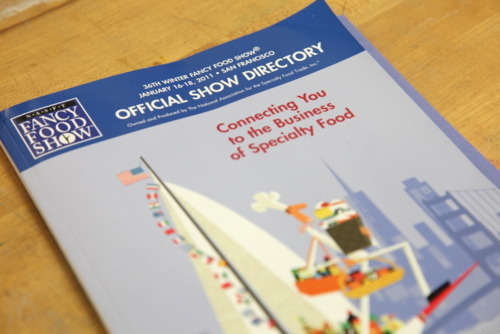
2011 Fancy Food Show Directory
Earlier this week, I attended the 2011 Fancy Food Show at the Moscone Center in San Francisco, which is the west coast’s largest specialty food and beverage event. The show, which is in its 36th year, is put on by the National Association for the Specialty Food Trade (NASFT). This year, over 1,300 exhibitors from 50 countries came out to show off about 80,000 specialty foods and beverages. The purpose of my visit was to see what kinds of gluten free products were available as well as talk to the companies and manufacturers about their thoughts on gluten free food. 

First things first, this show was huge. Vendors filled up the north and south halls of the Moscone center. The vendors ranged from large well known brands, to smaller mom and pop operations. I was surprised to see so many gluten free products, a lot more than I had expected. They were sometimes hard to find as I had to ask many of the representatives if their products were gluten free. I think that a sign signifying that they had gluten free products would have been helpful. Just about all of the vendors knew what gluten free products were so it is definitely on a lot of radars. Many of the vendors who didn’t have gluten free products said that they have been getting a lot of requests for them and that they have gluten free products in the works. This is definitely a step in the right direction for celiac and people with gluten free intolerance and see next year’s show being even bigger for the gluten free world. 

Vendors are coming out with very innovative ideas. One I liked in particular was the Gluten Free Falafel chips made by Famous Organics in Southern California. They had a great product that I think will be very successful in the gluten free market. I also saw a lot of sauce companies like Shiloh’s who have a whole line of gluten free sauces. Talking to some of these companies, I saw a genuine interest in the greater good. Like a particular salad dressing company who refused to put a gluten free label on their products even though they are gluten free. They want to ensure that they go through the right channels to ensure that their products don’t harm anyone. In fact this came up several times. It was very humbling to see that these companies actually care about the needs and health of their consumers. This also brought up a very good question of which gluten free certification company is the best and has the strictest testing. This is definitely something I will need to look into in the future. 

I learned a lot from the Fancy Food show and it also gave me a lot of great ideas on what to write on in the future. Combine that with the great companies who are putting work into producing a broader variety of gluten free food and it really shows me that things in the food world are changing. Companies are listening to the needs of the people and the people are becoming better informed and actually looking at what they are eating. With the conclusion of the 2011 Fancy Food Show, look forward to my reviews of the gluten free products I found at the show. 

~Calvin C.

Sunday, January 16, 2011

Weekend Special Edition: Detox/Cleansing Diet (Part 1/3)

Hello readers! This is RS bringing you our first special edition health post…”Detox Diet”.  About 5 months ago, I discovered, through endless research and exploration of my chronic symptoms, that I am gluten intolerant. It was not through the endless doctors that I visited in hopes of obtaining at least a hint as to what was going on with me, but instead was through my wife’s nursing school classmate whose description of her prior symptoms resonated with my own. She was gluten intolerant, and changing her diet made all the difference in her life. I set sail on my gluten-free journey and it is with the support of our team over here that I have found a wealth of products that make it possible.

I know there are many out there who’ve had similar experiences in which after endless doctor visits and consultation with specialists they feel no closer to determining the cause of their ailment. This was the case for me and boy do I wish I had met Anne Angelone (M.S, LaC) earlier! As you may recall, Anne was a guest at our studio back in December and she brought us the “Kaia Foods Sea Salt and Vinegar Kale Chips” for us to review. Not only has Anne proven to be an excellent resource for products to try, but her practice here in San Francisco deals with the very nature of our community’s health challenge… food sensitivities!

In our commitment to support our local vendors and healthcare practitioners, I have begun a treatment program with Anne and in the process of reviewing my experiences with her, I hope to provide you, our readers, with what I have found to be inspiration and hope for restoring balance in my health.

Anne’s acupuncture practice is no ordinary practice. She actually focuses on allergens and the foods that cause inflammation and the domino effect which follows… what I think of as a holistic approach. In addition to her regular practice (which I have now started and am absolutely inspired by!), Anne also offers monthly “Detox” workshops.

In these workshops, Anne takes people through the Chinese medicine philosophies and a structured analysis, through a series of health-related questions, to connect physical/mental manifestations with the underlying cause. Here is an excerpt from Anne’s workshop posting:

10 Day Detox with Real Food:
Learn tools to master:•    Better digestion and elimination
•    Fewer symptoms of Chronic Illness
•    Improved Concentration, Mental Focus and Clarity
•    Improved Mood
•    Increased Energy
•    Less congestion and fewer allergic symptoms
•    Less joint pain
•    Increased sense of relaxation
•    Great sleep


Sounds great to me!! I experience each of the items above so I am really excited about something which could potentially help. So I’ve signed up for this weekend’s workshop. But I’ve heard of these types of diet programs before and usually sound great but are unrealistic. However, what I like about this one is the fact that it is only 10 days, a reasonable $25, and you continue to eat REAL food… sounds like something I might actually be able to stick with and make it through! We will see…

Next weekend, I will post a recap and review of the workshop in which I will describe what I have learned and what my journey through the 10-day program will involve. The weekend following that, I will post how I feel after the 10-day program and whether I was able to complete it as she describes.

Saturday, January 15, 2011

Weekend Edition Hot Off The Press #5: Fact or Fiction...The Gluten Free Diet

A new year ushers in new beginnings, and for many that means a New Year’s resolutions of losing weight. There are tons of diets out there ranging from the cookie diet all the way to something more intense like a raw diet. One that is near and dear to our hearts is of course the gluten free diet. But is it really a way to lose weight? I was watching television the other week and as I was channel surfing, I stumbled upon a story on fad diets and whether or not they worked. When the gluten free diet came up, they said that you might actually end up gaining weight. They didn’t give much reasoning to the claim, so I decided to think about it myself as I feel I am fairly familiar with gluten free products. So the question posed is…Fact or fiction? Can you lose weight on a gluten free diet or will it make you gain weight?

To answer this question we have to look deeper into the purpose of gluten free food. I think one of the biggest misconceptions of gluten free food is that all of it is healthy and good for you. Our society is easily won over by the latest flashy package label. Many people see “Gluten Free” on a package and automatically associate it with being healthy without even reading the nutrition facts. What we have to remember is that this is food made specifically for people with a genuine need for it…the people with celiac disease and gluten intolerance.

As reviewers, we have paid close attention to the nutrition facts. If you take the time to look at it, you might find some of it surprising. When we review an item, I like to compare it to the regular gluten version of the product. The most recent example is my review for Glutino Gluten Free Sesame Pretzel rings. I compared it to a major brand of pretzel and found that the gluten free version actually had more calories and fat than the regular version. In other products it was salt or sugar or some other flavor additive that had much high levels. A lot of times, gluten free foods don’t have as much flavor as the real thing. So to make up for that deficiency, the manufacturers add higher levels of sodium or sugar to the product. It’s not intentional, but what happens is that these products end up having more sodium or fat or calories than the regular version.

Given the nutrition information above, will you lose weight on a gluten free diet?...Probably not. The trick is more in your eating habits than anything. Like with any food, the more you eat, the more weight you will gain. If you follow the general rule of thumb of portion control, you might be able to shave off a few pounds, but that’s a result of watching what you eat.

So are there any real benefits to a gluten free diet? For a celiac or someone who is gluten intolerant, it will make a huge difference, but for a normal healthy person, there is no real advantage of going gluten free. In fact some professionals in the field have actually said that it may be harmful. I’m not quite sure why, but I believe it has something to do with nutrients that are associated with gluten products that your body would be deprived of. If you are considering a gluten free diet, make sure to check with your doctor or nutritionist to determine if it is right for you.

The gluten free diet…fact or fiction? Unfortunately it just might be fiction. Those of you looking to shed a few pounds in the New Year, you might want to find another diet or better yet, just stick to the good old days of watching what you eat and portion control.

Saturday, December 18, 2010

Weekend Edition Hot Off the Press #4: Crave Bakery

Ever since the issues of gluten intolerance and celiac disease showed up on our radar, we have been searching high and low for good gluten free food to review.  We have the pastas and snacks covered, but we haven’t been able to find very many options for good gluten free baked goods.  In our search, one name kept coming up…Crave Bakery in San Francisco.  Crave specializes in gluten free baked goods such as brownies, cookies, cakes, and tarts.  A quick search on Yelp brought up rave reviews of their baked goods.  Intrigued by this, we knew we had to get a hold of them. 

A few days ago, I got the opportunity to interview Cameo Edwards, founder of Crave bakery.  In 2002, after struggling to figure out the root cause of her illnesses, Cameo came to the realization that she was sensitive to gluten.  “Craving” for the baked goods she loved so much, she put her family tradition of baking to good use fulfilling her cravings for baked goods in delicious gluten free form.  It all started with her famous gluten free, casein free brownies, and Crave Bakery was born.

The company has grown a lot since 2003.  They now have about 15 different baked items on their menu and sell in specialty grocery stores in 12 states.  They sell delicious cakes, cookies, cupcakes, tarts, and of course their famous brownies all of which are made with high quality and organic ingredients from small, local producers and family-owned operations.  They even have a special edition Pumpkin tart that is only available September through December for the holidays.  And if you’re looking to host a special event, Crave even offers custom cakes for your guests to enjoy.  Even if you have special needs due to allergies, it’s no problem for Crave, because they will be able to whip something up for you.

Crave puts a lot of care into their products.  From ingredients to manufacturing processes, they have everything figured out.  All of their ingredients are all of the highest quality and they make sure of it by researching all of their sources to ensure that they are confident about their operation practices.  Take for example

the eggs they use, which come from free-range, happy and active chickens in Petaluma.  In their manufacturing facilities, which are located in San Francisco and Sacramento, they have adapted segregated production which means that all of their products are made on gluten free specific machines that are run in their own section of the manufacturing facility.  And if you thought that wasn’t enough, they use third parties to ensure that their products contain no more than 5-ppm gluten.  That’s actually stricter than some gluten free certification agencies.  For those of you who have other allergies, you will also appreciate that they start their manufacturing everyday with the least allergenic products and end their production day with products that contain nuts.  

Cameo Edwards has done a spectacular job with Crave Bakery and we hope to see more from her and Crave Bakery.  If you’re interested in trying some of her products, you can find a list of all of their retail locations on their website or you can order directly online at cravebakery.com.  Visit us this coming week when we review some of the delicious baked goods from Crave Bakery. 


Saturday, December 11, 2010

Weekend Edition Hot Off the Press #3: Where Did the Nutrition Facts Go?!


WHERE DID THE NUTRITION FACTS GO?!

As we have been taste testing all this delicious gluten free food, we have been paying more attention to what is on the label.  The other day, we were having some gourmet tortilla chips and noticed that there were no nutrition facts on the package.  A few days later, we were having some brownies that were also missing the nutrition facts.  When we didn’t see those nutrition fact labels it brought up the question of when are nutrition facts required.  The nutrition facts label is our key to being informed about what we are eating.  In fact, we have become accustomed to it.  After digging around on the US FDA website, I was able to find the answer.  Hidden among the thousands of links on the website was the one word I was looking for…Exemptions. 

The one thing that caught my eye on the list is something called a Small Business Exemption.  I assume that formulating nutrition facts and getting them on a package is a costly process.  You have to pay a lab to analyze your product for the nutrition content and you have to do this for every single one of your products.  If it’s only for a couple of products, it’s probably not too bad, but if it’s for a whole line of products, the cost adds up.  Small businesses typically don’t have as much financial backing as larger companies and it would be difficult for them to finance all of these costs.  That’s where the Small business exemption comes in.  If your company has less than $50,000 in food sales you are exempt from putting nutrition facts on your products.  There is also an exception that says if you have more than $50,000 in food sales, and your total sales of food and non-food items is less than $500,000 you are also exempt. 

Other exemptions include food served or sold in restaurants, food served and sold for immediate consumption, and food processed and prepared primarily in a retail establishment and not outside of that establishment.  Restaurants, cafeterias, bakeries and deli’s fall into almost all of these categories.  Some of these places voluntarily provide this information to their customers, but most don’t.  This brings us to the question of… what is really in our food? 

There is a clause in the rules and regulation that states that if the company makes a claim about the product, like high in vitamin C or something similar, that product is no longer exempt and business must put nutrition facts on the packaging.

We all need to stay informed about what we are eating and the nutrition is a big part of that.  If the nutrition facts are missing, take that extra step to ask the necessary questions so that you are informed about what you are really eating.  You don’t want to dive into a dish blind, get informed.

*This information was found on the US FDA website.  Visit their website for more information about nutrition facts. 

Saturday, December 4, 2010

Weekend Edition Hot Off the Press #2: Sprouting Ideas

Mung beans are a common ingredient in Asian cooking.  Is it because it is readily available, is it the taste, is it the cost, or is it the health benefits.  It’s probably a combination of all of the above.  Yesterday we had a review for mung bean thread, which is noodle made with mung beans, broad beans and water.  It was affordable, it was tasty, and apparently it is good for you. 

So what are mung beans?  Mung beans have several different names.  They are known as green beans, mung, and moog among many other names.  When they sprout, they are bean sprouts.  Yes, the same bean sprouts that are probably in half of the dishes you order at your local Chinese restaurant.  So you have most likely encountered them.  You probably just didn’t know what they were.    Especially in Asian cooking, you will find different variations of the mung beans.  You know one form, which is the bean sprout, the other surprising places you might find the mung bean is in your noodles and your dessert.  The starch from the mung beans is extracted and used as an ingredient to make noodles and jellies. 

What are the advantages of eating mung beans?  Mung beans are very nutritious.  They are a good source for Vitamin A, B, C and E, as well as Calcium, iron, potassium and fiber.    Mung beans are recommended in diets because they help lower cholesterol, and help digestion because of their high fiber content.  What does this all mean?  Bottom line, they are good for you.

If you have access to Asian food stores, mung bean can also be a very affordable alternative.  Take for example our mung bean noodles from yesterday’s review, that package was only $0.99!  If you can save money while also maintaining a good diet, wouldn’t you try it?  Stir fry some mung bean noodles with some vegetables and maybe some meat and you have a nice balanced meal and you don’t have to break the bank. 

Saturday, November 20, 2010

Weekend Edition Hot off the Press #1: Salt to taste

This is the first edition of our weekend health awareness segment.  Every weekend we will be discussing health topics that we have encountered in our food reviews.  This weeks topic…SODIUM!

Sodium is important to have in our diet.  According to Dr. George Obikoya in his article titled The Benefits of Sodium, sodium helps maintain balance of ions in our body fluids and tissues and it stimulates muscle contraction.  (http://www.vitamins-nutrition.org/vitamins/sodium.html)  We of course can’t forget that sodium chloride, better known as salt, is also one of our favorite flavor additives and is one of the main contributors of sodium content.  Sodium can be tricky…too much sodium can lead to kidney disease and high blood pressure, but too little sodium can lead to malnutrition.  As we have been taste testing all of these gluten-free foods we have been paying more attention to the nutrition facts on the packaging.  What you find might surprise you.

So how much sodium should a healthy person really be ingesting to stay healthy?  According to the American Heart Association, you should aim to ingest no more than 1,500mg of sodium per day. (http://www.americanheart.org/presenter.jhtml?identifier=4708)  That translates into just a little more than half a teaspoon of salt.  Doesn’t seem like much. 

The other day, I was at the grocery store shopping and decided that I wanted to buy packaged deli meat and cheese to make a sandwich.  What I found surprised me…it actually scared me.  I saw that 1 slice of lunchmeat had 240mg of sodium and then I looked at the cheese slice and saw that it contained 250mg of sodium per slice.  I usually make a sandwich with 2-3 slices of meat and a slice of cheese and calculating the sodium in that is already 730-970mg of sodium depending if I use 2 or 3 slice of lunchmeat.  I’m not even including the sodium content of the bread and the mustard in my calculation and I’m already practically at my sodium intake limit for the day.  Needless to say, I tossed the idea of making a sandwich out the window. 

So what about those packages that say low sodium or reduced sodium?  Are those safe?  Well yes and no.  The important thing to do is to look at the numbers and make sure you understand them.  Pay close attention to the serving size.  Some of the serving sizes are ridiculously low and, if you aren’t aware of it, you may end up eating 5 or 10 servings in a sitting.  Also keep in mind that they base everything on a 2000 calorie diet and the sodium percentages are based on 2300mg, which is higher than the 1500mg that the American Heart Association recommends to aim for.  The American Heart Association website gives the meaning to all of the sodium content terms:

  • Sodium-free – less than 5mg per serving
  • Very low-sodium – 35mg or less per serving
  • Low-sodium – 140mg or less per serving
  • Reduced sodium – usual sodium level is reduced by 25%
  • Unsalted, no salt added or without added salt – contains only the sodium that is naturally part of the food. 
Bottom line, we all love the taste of salty foods, but make sure you know what you are eating.  It may not seem like you are ingesting large amounts of salt, but you really never know.    

*I am not a nutritionist and this information is not meant to professional health advice.  You should always consult an expert before changing your diet.